
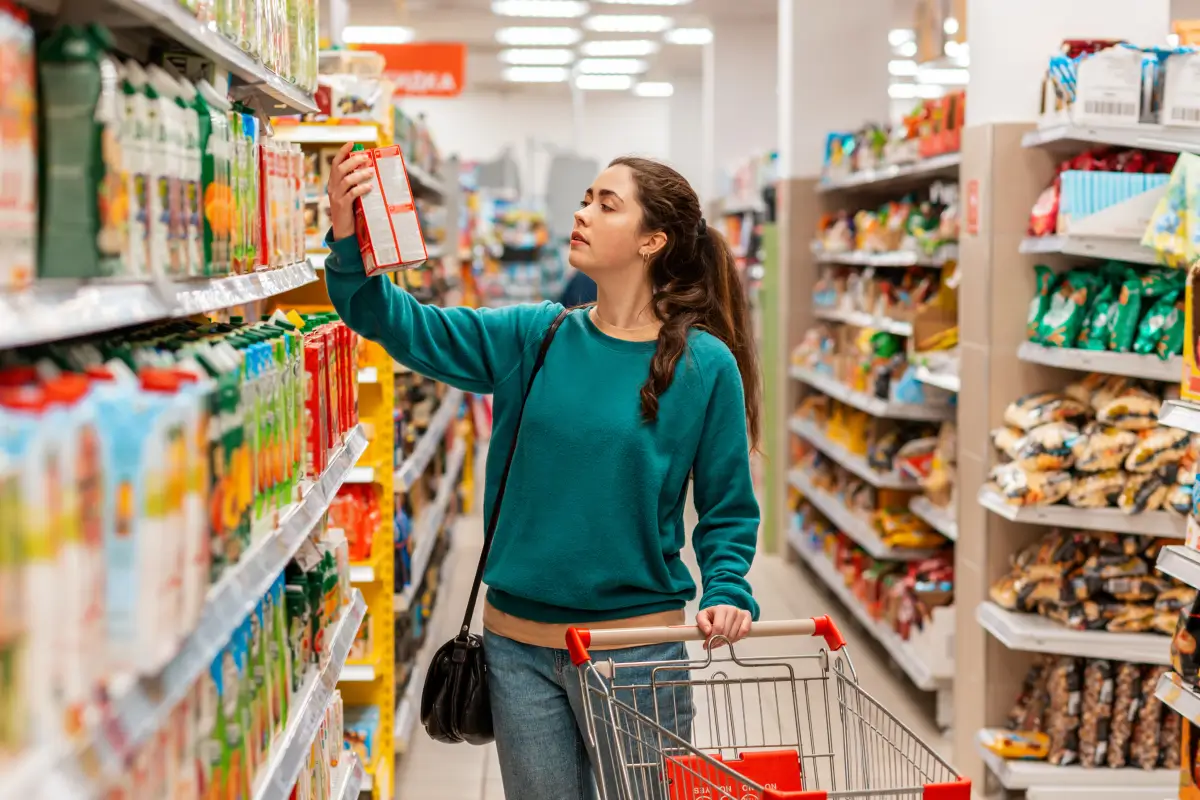
Retail Food Manufacturer
Major grocery chains and big-box retailers don’t simply ask if your product tastes good. They ask if your manufacturing partner holds the required certifications, if your packaging meets planogram specs, and if your documentation passes their vendor onboarding process. At Henry Broch Foods, we’ve spent over 80 years building the kind of operation that answers yes to all of it.
We are a BRC certified retail food manufacturer and CPG manufacturing company based in Waukegan, Illinois. Our 500,000-sq.-ft. facility operates over 30 purpose-built production lines for ambient dry goods, and we serve 140+ active customers across retail, foodservice, and private label. If you’re qualifying a manufacturing partner for retail distribution, this is what you need to know about us.
What Our Certifications Mean for Your Retail Access
BRCGS (Brand Reputation through Compliance Global Standards) certification is a GFSI-benchmarked food safety standard and an essential requirement in the vendor supply chains of major national retailers. Walmart, Target, Costco, Kroger, and comparable chains require BRCGS certification from the manufacturers in their supply chain. Without it, a brand can’t get a product on their shelves, regardless of how strong the formula or the sales story is.
Our BRC certification is among the highest grades issued under the standard. This is not the default outcome of completing an audit. It reflects how a facility is run: the consistency of production controls, the rigor of documentation practices, and the traceability of every ingredient through every run. For CPG brands evaluating manufacturing partners, our standing is a direct indicator that we will not be the obstacle between your product and a retail buyer’s approval.
For brands that have already cleared retailer qualification on their own side, our certification means your co-manufacturer won’t create a compliance gap in your vendor documentation package.
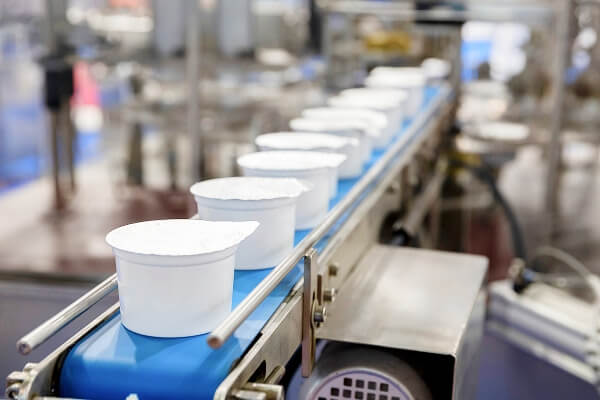
Retail-Ready Packaging Production: Beyond the Fill
Placing a product in grocery or big-box retail is not only a production question. It’s a packaging execution question. Retail buyers evaluate shelf presence, planogram compatibility, UPC placement, and secondary packaging structure before a new item earns placement. A CPG food manufacturer that doesn’t understand those requirements at the production level creates problems that show up after the purchase order.
Henry Broch produces retail-ready formats across numerous package types, including pouches, cartons, rigid containers, canisters, and cups. Our team works with brand managers and operations contacts to confirm that packaging specifications are production-feasible and retailer-compliant before a run begins. That includes:
- Secondary packaging structure: Club format, shelf-ready packaging, and display-ready configurations are all part of what we produce at scale.
- Retail documentation support: Our team assists with the specification documentation that retailer onboarding processes typically require from manufacturers in the supply chain.
Our contract manufacturing capabilities cover the production infrastructure behind these formats in full detail for buyers evaluating our technical specs. You can rely on us as your retail-ready packaging manufacturer.
If You’re Scaling from DTC to Retail, the Manufacturing Questions Change
A DTC food brand producing for its own e-commerce channel operates under a fundamentally different set of constraints than a brand entering the grocery channel. MOQs, case pack configurations, retailer compliance documentation, shelf-stable format requirements, and vendor onboarding timelines all become live variables the moment a retail buyer gets involved.
We work with DTC brands navigating this transition, and we approach it as a distinct operational challenge. The questions we help brands answer at this stage include:
- Does the current formula perform at production volumes that support a retail cost structure?
- Does the packaging format fit retailer shelf specs, or does it require a redesign before the first run?
- What certification documentation will the retailer ask your manufacturing partner to provide?
Henry Broch has the production scale, certification standing, and retail channel experience to serve as a partner throughout this transition. Brands entering retail for the first time get the same level of operational attention as our established global CPG customers.
If you’re evaluating private label manufacturing capabilities for retail store brand production, we handle that, too.
Find the Retail-Compliant Manufacturing Partner Your Product Deserves
If you’re in active vendor evaluation for a retail channel launch, a private label program, or a DTC-to-retail transition, Henry Broch Foods meets the standard retail buyers require. Our BRC certification, over 30 line facility, and 80+ years of ambient food manufacturing experience put us in a position most CPG manufacturing companies can’t match. Contact us, and our team will review your project and respond with a clear next step.
Contact Us
Frequently Asked Questions About Retail Food Manufacturing
What does a retail buyer’s vendor qualification process typically require from a food manufacturer?
Retail vendor qualification processes vary by chain, but most major grocery and big-box retailers require manufacturers to provide proof of GFSI-benchmarked food safety certification (such as BRCGS), facility audit history, traceability documentation, and allergen control protocols specific to the products in scope. Some retailers maintain proprietary approved vendor lists and require audit results that meet a minimum grade threshold. Our certifications meet or exceed the threshold that most major retail chains require of manufacturing partners in their supply chains.
How long does a typical retail product launch take from first production run to store shelf?
Timeline depends on several variables, including the retailer’s category review cycle, the brand’s existing compliance documentation, and whether new packaging needs to be developed. A brand that already has retailer approval and finalized packaging can move from production planning to first run in as few as eight to 12 weeks. Brands entering retail for the first time should account for additional lead time for vendor onboarding, compliance documentation, and any packaging iteration required to meet retailer shelf or planogram specs. Early manufacturing conversations help avoid timeline compression later in the process.
What’s the difference between a brand’s UPC and the packaging barcodes retailers require at the case level?
Consumer-facing products carry a UPC (Universal Product Code) that identifies the item at the point of sale. Retail distribution also requires a separate GS1-128 barcode at the case or shipping unit level, which retailers use for receiving, inventory management, and warehouse processing. Some retailers also require GTIN-14 or ITF-14 codes on outer cases. Brands new to retail frequently discover these barcode requirements during the retailer’s ordering or logistics onboarding process rather than before production, which can create delays. Confirming barcode requirements with the retailer and your manufacturing partner before finalizing packaging artwork avoids that problem.